
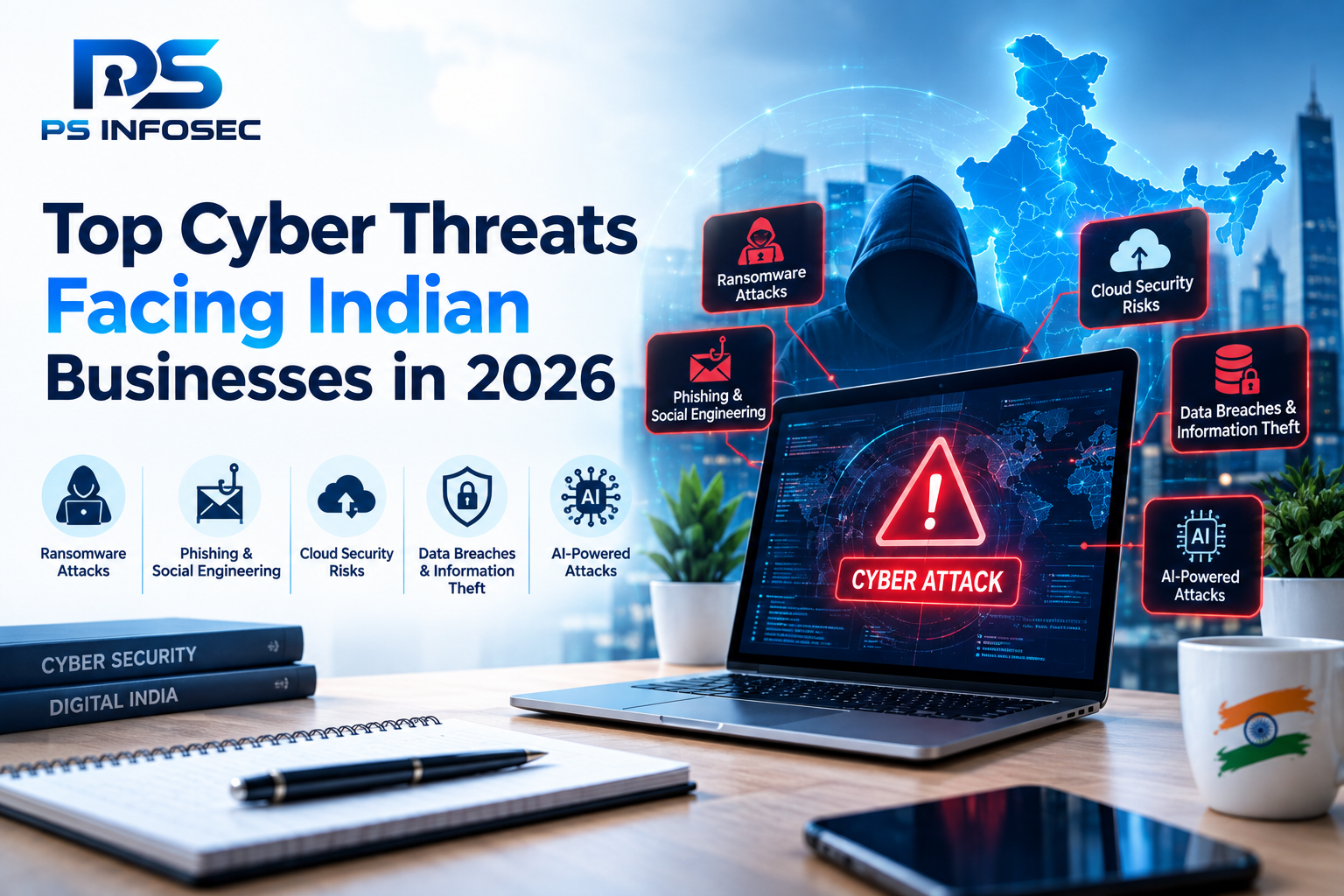
Every week brings a new headline — a hospital’s patient records leaked, an e-commerce platform’s customer database exposed, a manufacturing company locked out of its own systems by ransomware. These aren’t isolated incidents anymore. They are a pattern, and Indian businesses of every size are now firmly inside the target zone.
If you’ve been putting off a proper security review for your business, this is the year that decision catches up with you. In this post, we’ll walk through the biggest cyber threats Indian businesses are facing right now, why they’re growing so fast, and exactly how a professional Cyber Security Company in India helps you stay ahead of them — before they turn into a costly disaster.
Why Cyber Threats Are Escalating in India
A few forces are colliding at once, and together they explain why 2026 looks so different from just a few years ago:
- Faster digital adoption. Businesses are launching apps, moving to the cloud, and digitizing operations quicker than their security teams can keep up.
- Cheaper, easier attack tools. Attackers no longer need deep technical skill — ransomware-as-a-service and phishing kits are sold openly on the dark web.
- Legal pressure. The DPDP Act 2023 and CERT-In’s mandatory reporting rules mean a breach is no longer just a technical problem — it’s a legal and financial one.
- Remote and hybrid work. More employees accessing company systems from personal devices and home networks has widened the attack surface significantly.
Understanding the specific threats hiding behind these trends is the first step toward defending against them.
The Biggest Cyber Threats Indian Businesses Face Right Now
1. Ransomware Attacks
Attackers quietly get into your network, encrypt your files, and demand payment to unlock them. Indian manufacturing, healthcare, and logistics companies have been hit particularly hard, often losing days of operations even after paying up — there’s no guarantee attackers actually restore access.
2. Phishing and Business Email Compromise (BEC)
A convincingly faked email — often impersonating a vendor, bank, or even a colleague — tricks an employee into clicking a malicious link or transferring funds. This remains one of the single most common ways attackers get their first foothold into a company’s systems.
3. Data Breaches and Leaked Customer Information
Weak passwords, unpatched software, or a simple misconfiguration can expose customer names, phone numbers, payment details, or health records. Under the DPDP Act, a breach like this can now trigger heavy penalties, not just reputational damage.
4. Cloud Misconfigurations
As more businesses move to AWS, Azure, or Google Cloud, a surprising number leave storage buckets, databases, or admin panels open to the public internet — often without even realizing it. This is one of the fastest-growing causes of data exposure today.
5. Insider Threats
Not every risk comes from outside. A disgruntled employee, a careless contractor, or simply someone with excessive access privileges can cause just as much damage as an external hacker — sometimes more, because they already have legitimate access.
6. Supply Chain and Third-Party Risk
Your business might have strong security, but what about the vendors, freelancers, and software plugins connected to your systems? A single compromised third party can become the doorway attackers use to get into your network.
7. DDoS (Distributed Denial-of-Service) Attacks
Attackers flood your website or servers with traffic until they crash, knocking your business offline — a costly problem for e-commerce and service platforms that depend on constant uptime.
8. Web Application and API Vulnerabilities
Poorly secured login pages, exposed APIs, or flawed business logic in your web app can let attackers bypass authentication entirely, access other users’ data, or manipulate transactions.
How a Cyber Security Company in India Actually Defends Against These Threats
Knowing the threats is one thing — actually defending against them requires structured, ongoing work. This is exactly where a professional cyber security company in India comes in. Here’s how each core service maps to the threats above:
- Penetration Testing (VAPT) — actively simulates ransomware and hacking attempts to find your weak points before real attackers do.
- Web Application & API Security Testing — closes the gaps that lead to data breaches and unauthorized access.
- Cloud Security Assessment — catches misconfigurations before they turn into a public data leak.
- Employee Security Awareness Training — reduces the human error behind most phishing and BEC incidents.
- Compliance & Governance Support — ensures you’re aligned with DPDP Act and CERT-In requirements, reducing legal exposure if an incident does occur.
- 24×7 Security Monitoring (SOC) — detects unusual activity in real time, rather than discovering a breach weeks later.
- Incident Response Planning — ensures that if an attack does happen, your team knows exactly what to do instead of scrambling in a panic.
A one-time scan can’t defend against threats that evolve daily. This is why ongoing partnership with a cyber security company in India — not a single checkup — is what actually keeps a business protected.
Industry-Specific Risks Worth Knowing
Different sectors face different levels of exposure:
- Fintech and NBFCs — prime targets for data theft and fraud, with strict RBI compliance requirements on top.
- Healthcare — patient records are highly valuable on the black market, and breaches carry serious DPDP Act consequences.
- E-commerce — customer payment data and account credentials make these platforms constant targets for credential-stuffing attacks.
- Manufacturing — increasingly targeted by ransomware, since even short downtime causes major production and revenue losses.
- SaaS and IT Services — often hold access to multiple client systems, making them attractive supply-chain targets.
If your business falls into any of these categories, working with a cyber security company in India that understands your specific sector’s risk profile matters more than generic, one-size-fits-all protection.
What to Expect From a Genuine Security Partner
A dependable cyber security company in India won’t just point out problems — they’ll help you understand real business impact, prioritize fixes, and confirm those fixes actually hold up over time. Look for a partner who tests manually rather than relying purely on automated tools, communicates findings in plain language your team can act on, and stays involved after the initial assessment rather than disappearing once the report is delivered.
PS INFOSEC: Built to Handle These Exact Threats
At PS INFOSEC, security assessments are designed around the real threats Indian businesses face today — not generic, templated checklists. The approach includes:
- Manual, expert-led penetration testing that mirrors real attacker behavior
- Cloud configuration reviews to catch exposure before it becomes a public leak
- Compliance support aligned with DPDP Act, CERT-In, and ISO 27001 requirements
- Clear, prioritized reporting your team can act on immediately
- Free retesting after remediation, to confirm vulnerabilities are genuinely closed
PS INFOSEC works with businesses across Pune, Mumbai, and Dhule, helping them stay ahead of ransomware, data breaches, and compliance risk with security testing built for how attacks actually happen today.
Talk to PS INFOSEC About Your Security Risk
Frequently Asked Questions
1. What is the most common cyber threat facing Indian businesses in 2026? Phishing and business email compromise remain the most common entry point for attackers, followed closely by ransomware and cloud misconfigurations.
2. Can a small business really be a target for cyberattacks? Yes. Attackers often prefer small and mid-sized businesses precisely because they typically have weaker defenses than large enterprises, while still holding valuable customer or payment data.
3. How does a cyber security company in India help prevent ransomware attacks? Through penetration testing, network security reviews, and employee training that closes the common entry points ransomware relies on — like phishing emails and unpatched systems.
4. What happens if my business suffers a data breach under the DPDP Act? Businesses can face significant financial penalties and are required to report certain breaches to CERT-In within a strict timeframe, making prevention far less costly than recovery.
5. How often should a business reassess its cyber security posture? At minimum, once a year — and immediately after major changes like a new product launch, a cloud migration, or a significant increase in the customer data you handle.
Cyber threats aren’t slowing down in 2026 — they’re becoming more frequent, more automated, and more costly for the businesses caught unprepared. The good news is that most of these threats are preventable with the right defenses in place. Partnering with an experienced Cyber Security Company in India isn’t about reacting after something goes wrong — it’s about making sure it never gets that far.
Ready to find out where your business is actually exposed? Get in touch with PS INFOSEC for a professional security assessment.