
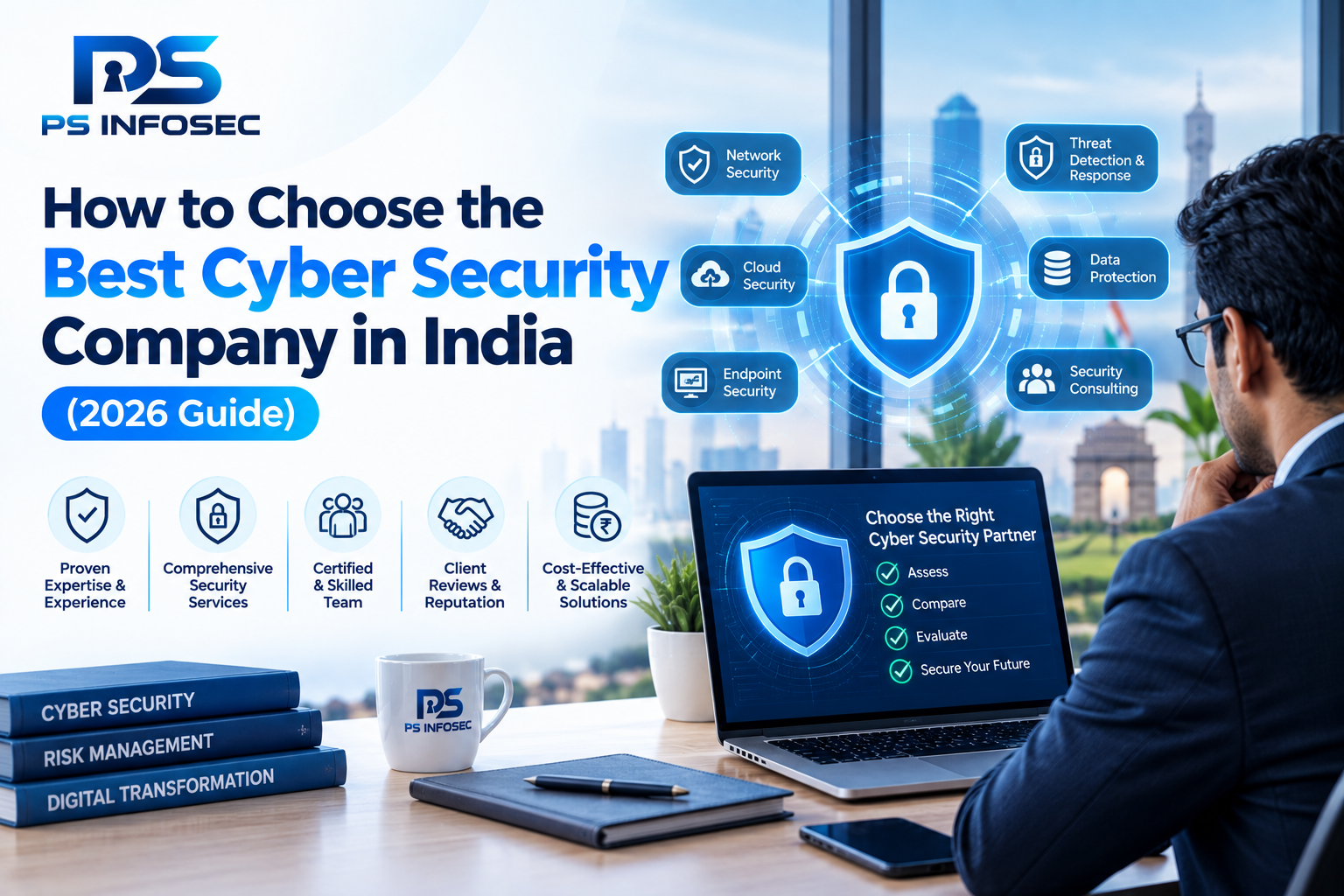
Cyberattacks on Indian businesses are no longer rare, isolated incidents — they are a daily reality. From small e-commerce startups to large enterprises, every business with an online presence is a potential target. This is exactly why hiring the right Cyber Security Company in India has become one of the most important decisions a business owner can make in 2026.
But here’s the problem: search “cyber security company in India” today, and you’ll find hundreds of vendors, all claiming to be “the best.” Some offer cheap automated scans and call it a “security audit.” Others promise the world but deliver a generic PDF report that nobody on your team can actually act on.
This guide will help you cut through the noise. You’ll learn what a genuine cyber security company in India should offer, the red flags to avoid, and a practical checklist to pick a partner you can actually trust with your business’s digital safety.
Why Every Indian Business Needs a Cyber Security Company Today
India has seen a sharp rise in ransomware, phishing, and data breach incidents across sectors — banking, healthcare, e-commerce, IT, and even small manufacturing units. A few reasons this is happening faster than ever:
- Rapid digital adoption — more businesses moving core operations to cloud platforms, mobile apps, and web portals, often faster than their security keeps up.
- Stricter regulations — the DPDP Act 2023 and CERT-In’s reporting guidelines now legally require businesses to protect user data and report incidents quickly.
- Rising attacker sophistication — attackers today use automated tools to scan thousands of websites for weak points within minutes.
- Third-party and vendor risk — a single unsecured vendor connected to your systems can expose your entire business.
A single data breach can cost an Indian business not just money, but customer trust, legal penalties, and long-term reputational damage. This is why working with an experienced cyber security company in India isn’t optional anymore — it’s a basic requirement of running a modern business.
What Does a Cyber Security Company in India Actually Do?
Not all cyber security companies offer the same services. Before you choose one, it helps to understand what a full-service cyber security company in India typically covers:
1. Vulnerability Assessment
A structured scan of your network, applications, and systems to identify and prioritize weaknesses before attackers find them.
2. Penetration Testing (VAPT)
Simulated, real-world attacks carried out by security experts to show exactly how far a hacker could get into your systems — and what damage they could cause.
3. Web Application & API Security Testing
In-depth testing of your website, web apps, and APIs against the OWASP Top 10 vulnerabilities and business-logic flaws that automated tools often miss.
4. Cloud Security Assessment
Reviewing configurations and access controls on AWS, Azure, or Google Cloud — since misconfigured cloud settings are one of the leading causes of modern data breaches.
5. Compliance & Governance Services
Helping businesses meet ISO 27001, SOC 2, DPDP Act, and RBI framework requirements — essential for companies handling sensitive customer or financial data.
6. Security Operations Center (SOC) Services
Ongoing, 24×7 monitoring of your systems to detect and respond to threats in real time, rather than relying only on one-time assessments.
7. Incident Response & Digital Forensics
Rapid support if a breach does happen — containing the damage, identifying the root cause, and helping you recover safely.
A genuine cyber security company in India will usually offer most of these under one roof, rather than forcing you to hire five different vendors for five different needs.
Signs Your Business Needs to Hire a Cyber Security Company in India
You don’t need to wait for an attack to justify hiring a security partner. Consider reaching out if:
- You’ve never had a professional security assessment done on your website or systems.
- Your business handles customer data, payments, or sensitive records.
- You’re preparing for ISO 27001, SOC 2, or DPDP Act compliance.
- Your team relies only on antivirus software and a firewall for protection.
- You’ve recently moved systems to the cloud.
- A client, investor, or partner has asked for proof of your security posture.
- You’ve experienced a security incident, even a minor one, in the past.
If even one of these applies to your business, it’s time to talk to a professional cyber security company in India rather than putting it off.
How to Choose the Best Cyber Security Company in India: A Practical Checklist
This is where most businesses get confused. Here’s what actually separates a trustworthy cyber security company in India from one that’s just selling a scan report with a fancy name.
1. Manual Testing, Not Just Automated Scanning
Automated tools are useful, but they only catch known, surface-level issues. Skilled attackers exploit business-logic flaws and configuration gaps that scanners simply cannot see. Ask any potential partner: “Is this manual testing by a human expert, or just an automated scan?” The answer tells you a lot.
2. Clear, Actionable Reporting
A good report doesn’t just list vulnerabilities — it explains the real business risk, ranks issues by severity (using something like CVSS scoring), and gives your team a clear roadmap for fixing them first. If a sample report is full of jargon your developers can’t act on, that’s a red flag.
3. Compliance Expertise
Whether you need to align with the DPDP Act, CERT-In guidelines, ISO 27001, SOC 2, or RBI frameworks, your security partner should understand Indian regulatory requirements — not just generic global standards.
4. Free Retesting After Fixes
Fixing vulnerabilities is only half the job. A reliable cyber security company in India will retest your systems after remediation to confirm the issues are genuinely closed — not just marked “resolved” on paper.
5. Industry Experience and Track Record
Look for real case studies, client testimonials, and evidence of work across industries similar to yours. Certifications held by the team (like OSCP, CEH, or CISSP) are also a strong trust signal.
6. Scalable Engagement Options
Your security needs will grow as your business grows. Choose a partner who can start with a single vulnerability assessment and scale up to a full enterprise security and compliance program later — without you needing to switch vendors.
7. Transparent, Scope-Based Pricing
Be cautious of vendors offering a flat, one-size-fits-all price without understanding your systems first. Genuine security engagements are scoped based on what’s being tested, so pricing should reflect your actual environment.
How Much Does It Cost to Hire a Cyber Security Company in India?
Pricing varies widely depending on the scope of work:
- Starter security check (basic vulnerability assessment) — suited for small businesses getting their first formal review.
- Advanced protection (penetration testing + web/API security testing) — suited for growing companies with customer-facing products.
- Enterprise security (full assessment covering cloud, application, infrastructure, and compliance) — suited for larger organizations or those facing a compliance deadline.
There’s no fixed monthly fee that fits every business. A trustworthy cyber security company in India will always ask about your systems and risk profile first, then give you a custom quote — not a generic package price.
Common Mistakes to Avoid When Choosing a Cyber Security Partner
- Choosing on price alone. The cheapest option is often just an automated scan relabeled as an “audit.”
- Skipping the sample report request. Always ask to see a sample report before signing up.
- Ignoring compliance needs. If you’re in finance, healthcare, or handle large volumes of user data, compliance expertise is non-negotiable.
- Treating security as a one-time task. Threats evolve constantly; ongoing monitoring matters as much as periodic testing.
- Not asking about retesting. Without a free retest, you have no real confirmation that vulnerabilities were actually fixed.
Why Businesses Trust PS INFOSEC as Their Cyber Security Company in India
At PS INFOSEC, security assessments are carried out by experienced consultants who test your systems manually — the way a real attacker would — rather than relying only on automated scanner output relabeled as an “audit.” Every engagement includes:
- Manual, human-led testing across offensive security, infrastructure, cloud, and compliance
- Clear, prioritized reporting built for action, not just documentation
- A free retest once fixes are applied, to confirm issues are genuinely resolved
- Engagements scoped to match where your business actually is — from a single vulnerability scan to a full enterprise assessment
PS INFOSEC works with businesses across Pune, Mumbai, and Dhule, helping them close real security gaps and meet compliance requirements like DPDP Act, ISO 27001, and CERT-In guidelines — with reports your team can actually understand and act on.
Get a Free Security Assessment from PS INFOSEC
Frequently Asked Questions
1. What is the best cyber security company in India for small businesses? The best choice depends on your specific needs, but look for a company offering scoped, affordable starter assessments (like basic vulnerability assessment) rather than forcing small businesses into expensive enterprise packages upfront.
2. How do I verify if a cyber security company in India is genuine? Ask for a sample report, check for team certifications (OSCP, CEH, CISSP), request client references, and confirm whether testing is manual or purely automated.
3. Is penetration testing mandatory for Indian businesses? It’s not universally mandatory by law, but it is often required for ISO 27001 and SOC 2 compliance, and strongly recommended under CERT-In guidelines and the DPDP Act for businesses handling sensitive data.
4. How often should a business get a security assessment done? Most experts recommend at least once a year, or after any major change to your systems, such as a new application launch or a cloud migration.
5. What’s the difference between vulnerability assessment and penetration testing? A vulnerability assessment identifies and lists potential weaknesses. Penetration testing goes a step further by actively attempting to exploit those weaknesses, showing real-world impact.
Choosing a cyber security company in India isn’t just about ticking a compliance checkbox — it’s about protecting your customers, your data, and your business’s future. Focus on partners who offer manual expert-led testing, clear reporting, compliance knowledge, and ongoing support, rather than the cheapest automated scan you can find.
Learn More: https://psinfosec.com/